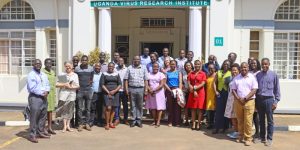

Scientific progress rarely happens on its own… It grows from the work of dedicated researchers asking difficult questions and searching for solutions to complex health challenges.
At the Uganda Schistosomiasis Multidisciplinary Research Centre (U-SMRC), supporting the next generation of scientists is an important part of the Centre’s work. The Centre brings together researchers from different disciplines to better understand schistosomiasis and develop improved strategies for its control. Alongside this research, U-SMRC is supporting doctoral training for Ugandan scientists investigating key questions about the disease.
Three PhD students are currently contributing to the programe, each exploring a different extent of the disease, from the environmental conditions that enable transmission, to the genetic diversity of the parasite, and the human immune responses that shape the disease outcomes.
Together, their work shows how building scientific capacity in Africa can drive locally relevant solutions for millions affected across the continent.
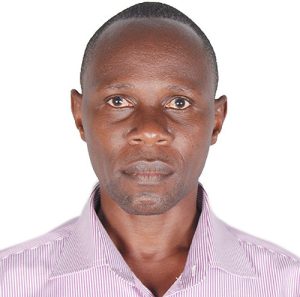 For David Oguttu, understanding schistosomiasis begins with the environments where transmission occurs. David is pursuing his PhD at Mbarara University of Science and Technology (MUST).
His research focuses on freshwater snails, the intermediate hosts responsible for transmitting the parasite Schistosoma mansoni (S.m) to humans. By studying how water quality, aquatic vegetation, and human activity influence snail populations, David is highlighting the ecological conditions that allow transmission to persist in endemic communities.
“If we understand the ecological conditions that allow snail populations to thrive, we can design smarter and more targeted interventions,” David explains.
Insights from his work could inform environmental management strategies and guide health authorities to focus control efforts in areas where the risk of transmission is highest.
While environmental factors influence where transmission occurs, the biology of the parasite itself can influence how disease manifests in different communities.
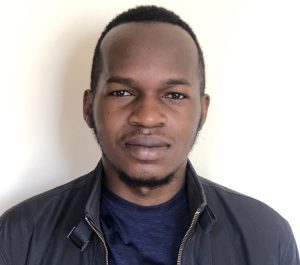 Davis Kiberu is pursuing his PhD at Makerere University, Uganda. His research focuses on the different types (genetic variations) of the parasite Schistosoma mansoni found across the Albertine and Lake Victoria regions.
“Understanding the parasite at the genetic level allows us to ask new questions about how the disease behaves in different regions,” he says.
In the long term, these findings could explain why some communities experience more severe burdens and may support the development of more targeted treatment strategies.
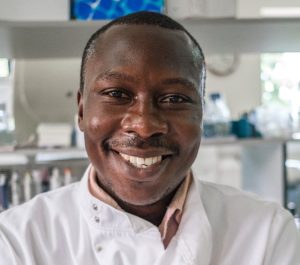
Matthew Odongo is also pursuing his PhD at Makerere University, Uganda. His research focuses on how the body’s immune response to the parasite Schistosoma mansoni differs between communities living around Lake Albert and Lake Victoria.
He explains, “Communities experience schistosomiasis differently, and understanding those differences is essential if we want interventions that truly work for the populations most affected.”
His work could help guide future vaccine development and support treatment approaches that better reflect the needs of different communities.
Looking Ahead