

Alison Elliott
Alison Elliott is a physician, specialising in infectious diseases and tropical medical research. After a degree in Natural Sciences and medical training in the UK she went to Zambia in 1988, and undertook early studies on the interaction between tuberculosis and HIV infection. Between 1992 and 1995 she undertook an infectious diseases fellowship in the USA, with research on the immunology of tuberculosis at the National Jewish Center in Denver, Colorado. Since 1996 she has been working in Uganda, supported by Wellcome Trust funding, at the Medical Research Council Unit at the Uganda Virus Research Institute (UVRI), where she is head of the Co-infection Studies Programme.Alison's research interests focus on the immuno-modulating effects of chronic infections. After early studies on HIV and tuberculosis she developed an interest in the immuno-modulating effects of helminths. Current research particularly addresses the effects of maternal helminth infection, and helminth infections in young children, on outcomes in childhood. In addition, she is leading a cluster-randomised trial among fishing villages in the islands of Lake Victoria, Uganda, investigating the effects of standard, versus intenstive, intervention against helminth infections on responses to vaccines, to microbial pathogens and to allergens.

Angella Nalwoga
Non communicable diseases (NCDs) such as cancers are increasing in developing countries. Majority of these cancers, in developing countries, are caused by viral infections. I am interested in studying these oncogenic viruses. My current work is focusing on the transmission and immune response of Kaposi's sarcoma associated herpesvirus, a virus responsible for Kaposi's sarcoma.
Damalie Nakanjako
Damalie Nakanjako (MBChB, MMED, PhD) is a professor of Medicine, and Deputy Dean of the school of Medicine at Makerere University College of Health Sciences, Kampala, Uganda. She has over 16 years' experience in Infectious Diseases care, research and training at different platforms including community trials with simple interventions such as safe water and cotrimoxazole prophylaxis to reduce morbidity and mortality among people living with HIV (PLHIV), hospital-based studies to evaluate the implementation of basic tools like provider-initiated HIV testing and routine TB screening to improve access to HIV diagnosis, management of TB-HIV co-infections and timely initiation of anti-retroviral therapy in a hospital setting, epidemiological studies to understand immune recovery in long-term HIV treatment cohorts, laboratory-based studies to understand cellular mechanisms of suboptimal immune recovery, as well as clinical trials on innovative interventions of adjuvant therapy to maximize the benefits of antiretroviral therapy among PLHIV. She is currently involved in translational research in infection and immunity at Makerere University’s infectious Diseases Institute, to build local capacity to utilize basic science research to improve patient care.She trained in leadership and management in health at University of Washington, Seattle, USA (2015). She is currently a group leader of a translational immunology research group under the Makerere University UVRI (MUII) program and scientific director of the translational laboratory at Makerere University’s Infectious Diseases Institute. Her research group focuses on chronic inflammation and its complications among HIV-infected adults on life-long antiretroviral therapy in sub-Saharan Africa. She is a trainer, supervisor and mentor of other upcoming scientists, to build the next generation of scientists that will combat current and future challenges to global health in Africa and worldwide. She is winner of the 4th Fourth Annual Merle A. Sande Health Leadership Award 2013. Link: http://www.accordiafoundation.org/news/dr-damalie-nakanjako-named-winner-of-fourth-annual-merle-a-sande-health-leadership-award/index.

David Patrick Kateete, BVM, MSc, Ph.D.
Lecturer, Dept. of Medical Microbiology, College of Health Sciences, Makerere UniversityDepartments of Medical Microbiology; Immunology & Molecular Biology
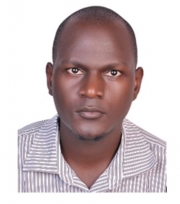
Dennis Kalibbala
I am statistician with a bachelor’s degree in Economics and Statistics. My interest in medical statistics made it easy for me to decide without hesitation to pursue a master’s degree in clinical Epidemiology and biostatistics at Makerere University.Currently, I work with Makerere University-Johns Hopkins University (MUJHU) Research Collaboration as a Data Manager of a hospital birth defects surveillance program in Kampala, Uganda. This position has enabled me acquire comprehensive knowledge about managing big datasets while applying principles of epidemiology and biostatistics. The position advanced my analysis skills with STATA, ODK, REDCap and learning of R and Python.
My experience with managing big datasets make me feel I have reached a point where I now want to use big datasets to predict future disease occurrence and events. Therefore, my long term research interests involve use of machine-learning techniques to solve public health problems. I am now aiming to pursue a PhD in Health Data science or Biostatistics.
My goal is to become an independent researcher and publish many articles. I have taken several trainings in scientific writing and currently 3 articles under review in a journal where am a co-author. I am also publishing my master’s research in the next few months as a first author.

Dennis Muhanguzi
Over 10 years' experience working on the molecular epidemiology of tsetse and tick-borne diseases and in applying new research outcomes in addressing societal and livestock health problems. The key research areas have been molecular typing of tsetse and tick-borne hemoparasites and in optimising tsetse and tick-borne disease control methods.
DR Brenda Apio Okech
Dr Okech is a Lecturer at Makerere University in the Biochemistry Department in the College of Natural Sciences. She mainly lectures in Immunology and Clinical trial related courses. Dr Okech has experience as a scientist as well as Manager of Research with a passion for mentoring younger Scientists.
Dr Irene Andia Biraro
Dr Irene Andia Biraro is a physician and senior lecturer at the Department of Internal Medicine, School of Medicine, College of Health Sciences, Makerere University, Kampala, Uganda. She is also an Honorary Associate Scientist at the MRC/UVRI &LSHTM Uganda Research Unit. She has a strong background in academia with expertise in infectious diseases and immunology, with a special interest in tuberculosis (TB) infection and its co-infections/co-morbidities. I have a particular interest in understanding more about the protective immune responses in TB, factors that could be associated with susceptibility to TB infection, immune diagnosis of TB infection and the effects of chemo-prophylaxis. She is currently building her research career and focus to investigate the epidemiological and immunological interactions between tuberculosis and type 2 diabetes mellitus. Irene is also passionate about medical education, in particular the impact of mentorship and quality improvement in post graduate training.
Dr Margaret Nampijja
MBChB, PhD Developmental PsychologyResearch interest: Early Child Development (ECD).
Having qualified as a medical doctor at Makerere University, Margaret worked with the MRC/UVRI Uganda Research Unit where she rapidly advanced her academic qualifications obtaining an MSc and PhD in Developmental Psychology at Lancaster University, UK. She won a Wellcome Trust funded MUII postdoctoral fellowship with which she investigated childhood infections and cognition further. She received funding from Saving Brains with which she is assessing the feasibility and impact of early detection and intervention for infants with neurodevelopmental impairment.
She is currently undertaking the African Research Excellence Fellowship (AREF) to further strengthen her capacity as a research leader. She has led and co-authored several peer reviewed publications from her own research and collaborative studies. Margaret is currently an Associate Research Scientist at the African Population and Health Research Center in Nairobi leading more research in ECD. Making significant scientific and public health contributions towards optimizing children’s development drives Margaret’s strong passion for ECD research.
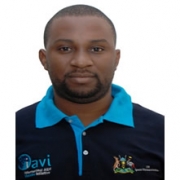
Dr. Aloysious Ssemaganda
Dr. Aloysious is a Ugandan scientist with over 15 years’ experience in laboratory-based research and holds a PhD in Molecular Immunology, synthetic chemistry and vaccine development from Griffith University, Australia. His doctoral studies were focused on the pre-clinical development and immunological assessment of novel whole parasite blood-stage malaria vaccines. He also holds Master of Science in Molecular Biology and Biotechnology as well as a Bachelor of Biomedical Laboratory Technology from Makerere University, Kampala.Majority of his research has focused on the development and optimization of functional cellular immunological assays for use in vaccine studies. Additionally, he also has a wealth of experience in training and mentoring of scientists and students on the use and application of multi-parameter flow cytometry, notably at regional International AIDS Vaccine initiative Clinical Research Centers as well as the MUII Immunology in the tropics course. His current appointment is with the MRC/UVRI and LSHTM Uganda Research Unit as a Post-doctoral scientist working on advancing Vaccine Immunology, Science and Technology in Africa (VISTA) to contribute to the design and assessment of the next generation HIV T cell immunogens within the IAVI consortium.

Dr. Annet Nanvubya
Dr. Annet Nanvubya, (MBChB, MPH) is a Ugandan Medical Doctor and Researcher working with UVRI-IAVI HIV vaccine Program as the Clinical Trials’ Manager since 2002. She has participated in several IAVI funded phase 1/II HIV vaccine trials. She has provided substantial clinical support for many field based studies which helped to document the HIV infection rates in fishing communities along Lake Victoria in Uganda.She is also actively involved in clinical care and management of research participants for all the clinical trials conducted by the UVRI-IAVI HIV vaccine program.
She Coordinates a Reciprocal Monitoring Scheme (RMS) which was initiated by the East African Consortium for Clinical Research (EACCR) and funded by the European and Developing Countries Clinical Trials Partnership (EDCTP) for strategic quality management of health research in Africa. The scheme has an accessible regional pool of 25 trained and experienced health professionals who monitor trials using standardized tools in mutual cross-site monitoring visits as a planned part-time activity. She is currently pursuing a PhD in Medical Sciences from the University of Antwerp in Belgium. She is passionate about Reproductive health and HIV/AIDS Biomedical research

Dr. Benard Jasper Ssebide
Dr. Ssebide has a degree in Veterinary Medicine and a Masters degree in Wildlife Health and Management. He joined the staff of the Mountain Gorilla Veterinary Project (MGVP, Inc.) as a field veterinarian in Uganda in 2007, and then transitioned to become MGVP, Inc.’s Country Coordinator for the PREDICT Project in Uganda in 2010, and MGVP’s Country Head Veterinarian in 2014. As the PREDICT Country Coordinator, Ssebide led a field team that collected samples from more than 3000 wild primates, bats and rodents for the detection of potentially zoonotic viruses in wildlife with a high degree of contact with people. He had primary responsibility for: implementing systematic sampling across a variety of landscapes and at a variety of human-animal interfaces; supervising staff in the field and office; liaising with the in-country diagnostic laboratory to facilitate sample testing; rapid and accurate data entry; communications with government and non-governmental partners and stakeholders; budget management; and representing PREDICT on the Government of Uganda’s National Task Force for several disease outbreak investigations. Prior to joining MGVP, Inc.,Dr. Ssebide worked for the Ugandan Wildlife Authority, first as a Veterinarian and then as Chief Park Warden of Mgahinga Gorilla National Park in southwestern Uganda. Dr Ssebide has significant experience in many aspects of wildlife health and conservation, including but not limited to: wildlife veterinary interventions and disease investigation; wildlife captures and translocations; monitoring of wildlife populations, census and habitat assessments; community conservation; and protected area management, planning and evaluations.

Dr. Charles Drago Kato
Dr. Charles Drago Kato is a Lecturer at the School of Biosecurity, Biotechnical and LaboratorySciences at Makerere University, Kampala, Uganda. Charles attained his PhD from Makerere University in Clinical Immunology and Molecular Genetics with support from the Consortium for Advanced Research Training in Africa (CARTA) and Afrique One Consortium in 2016. He holds a Master of Science degree in Structure Molecular Biology from the University of London and a second Master of Science degree in Molecular Biology & Biotechnology from Makerere University with a Bachelor’s degree in Veterinary Medicine from the same institution.
Charles\'s research interests are in understanding the Immunology of disease co-infections and host-parasite interactions in infectious and zoonotic diseases so as to understand disease epidemiology, improve diagnostics and design better therapeutic interventions. Charles currently research is on the use of proteomics technologies to identify biomarkers in Human African trypanosomiasis, a path that was initiated under a Postdoc Fellowship with the Makerere University/UVRI Infection and Immunity Research Training Programme (MUII-Plus). Charles believes that sustainable disease control is achievable through multidisciplinary collaborative approaches and the use of novel advanced technologies.

Dr. Kabata Pritch Kagera
Kabata Pritch Kagera graduated with his Bachelor of Medicine and Surgery from Kampala International University in 2015. He worked for two years as a medical intern and medical officer at Kisiizi Hospital. Dr. Kabata subsequently joined Makerere University for his Masters of Medicine in Internal Medicine in 2017 and currently in his 3rd Year.He joined the MUII-PLUS programme under the MMED GRANT. He has special Interest in the Host Immune Response to Infection and subsequently doing his Masters thesis in that field. He hopes to progress his work to a PhD later in his career.
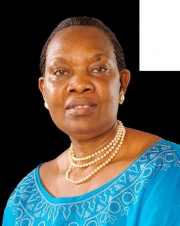
Dr. Proscovia Naluyima Sekiziyivu
Dr. Proscovia Naluyima Sekiziyivu, PhDLaboratory Director, Makerere University Walter Reed Project
I am a basic scientist with a passion for strengthening medical laboratories and training young people for careers in healthcare. I am the Laboratory Director of Makerere University Walter Reed Project’s (MUWRP) College of American Pathologists’ certified laboratory. I am a senior investigator and integral member of MUWRP’s scientific research team, responsive to the scientific goals of the MUWRP research program, recommending changes to existing protocols or suggesting new lines of inquiry as appropriate. I am also an Honorary Lecturer of immunology at Makerere University School of Biomedical Sciences department of immunology and molecular biology and have participated in the training of both undergraduate and postgraduate students for close to 10 years.
For the last two years I have been the Ugandan laboratory lead for the Joint Mobile Emerging Diseases Intervention Clinical Capability program designed to develop capacity of a multidisciplinary team of clinical and laboratory personnel to perform clinical research and trials in viral hemorrhagic fevers. Under this program I direct the activities of a Biosafety level II plus laboratory designed to support clinical care of patients infected with high consequence pathogens like viral hemorrhagic fever, and have received training on Ebola Case Management. I am part of the Ugandan National Task Force, a department of the Ministry of Health mandated to respond to outbreaks of diseases with epidemic potential. I also have expertise in multicolor flow cytometry and have experience of over 10 years performing HIV immunology research.
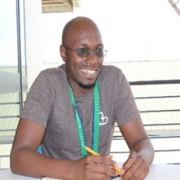
Dr. Simon Kimuda
Simon Kimuda (PhD) is a associate Scientist at Medical Research Council/UVRI Uganda Research Unit on AIDS, Uganda. My research is in the field of tuberculosis (TB) immunology particularly in the area of antibody-mediated immunity against Mycobacterium tuberculosis, its causative agent. I have been involved in cross-sectional studies to characterize the quality of the antibody response in individuals with TB infection. I am also interested in the development of tools that can be used to predict natural or vaccine induced immunity to TB. My goal is to generate information that is important in the advance of new vaccines against TB, a disease that is responsible for many deaths in Uganda.
Emma Thomson
Emma C Thomson is a Clinical Senior Lecturer at the MRC CVR and a Consultant in Infectious Diseases in Greater Glasgow and Clyde. She trained in infectious diseases in London and carried out her PhD at Imperial College London and the University of Oxford.Emma is funded by a Wellcome Trust fellowship to investigate the early immune response to Hepatitis C infection and by the MRC to investigate new and emerging HCV genotypes in the UK and in sub-Saharan Africa. She co-ordinates the Acute HCV UK and is a member of the STOP HCV consortium.

Fiona Cresswell
The main focus of Fiona’s work is HIV-related brain infections. As a principal investigator of a phase II trial of high dose rifampicin in TB meningitis (RifT trial) in Mulago and Mbarara Hospitals she is hoping to contribute towards improving diagnosis and treatment of HIV-associated Tuberculous meningitis. Fiona is a clinical PhD fellow at the Infectious Diseases Institute and London School of Hygiene and Tropical Medicine, and honorary research fellow at LSHTM-MRC-UVRI Uganda Research Unit.Fiona Crosswell
The main focus of Fiona’s work is HIV-related brain infections. As a principal investigator of a phase II trial of high dose rifampicin in TB meningitis (RifT trial) in Mulago and Mbarara Hospitals she is hoping to contribute towards improving diagnosis and treatment of HIV-associated Tuberculous meningitis. Fiona is a clinical PhD fellow at the Infectious Diseases Institute and London School of Hygiene and Tropical Medicine, and honorary research fellow at LSHTM-MRC-UVRI Uganda Research Unit.
Gerald Mboowa
Gerald Mboowa is a Bioinformatics & Genomics Research Fellow at the College of Health Sciences, Makerere University (MakCHS). Gerald graduated with a MSc in Immunology and Clinical Microbiology at Makerere University in 2014. Later in the same year, he started a fellowship in human Genetics and Genomics at the Baylor College of Medicine in Houston, Texas for two and a half years. He has also done a fellowship in bioinformatics at the University of Cambridge, the United Kingdom. His Ph.D research focused on identifying host functional genetic loci that are important in pediatric HIV/AIDS disease progression in sub-Saharan Africa populations. This work was funded by the Collaborative African Genomics Network (CAfGEN) of the H3Africa consortium (NIH Grant #: 1U54AI110398) and the DELTAS Africa Initiative Grant #: DEL-15-011 through the Training Health Researchers into Vocational Excellence in East Africa (THRiVE-2).Gerald has worked with the Nurturing Genomics & Bioinformatics Research Capacity in Africa (BRecA) programme in developing bioinformatics curricula for both MSc and PhD programs at Makerere University. He is an instructor on a Computational and Molecular Epidemiology Training in TB and HIV in Uganda. Currently, his research interests include; Genomics, Bioinformatics, Microbiome/Metagenomics, and Antimicrobial Resistance.
Gyaviira Nkurunungi
Gyaviira completed a Bachelor's degree in Biochemistry from Makerere University and a Masters in Immunology of Infectious Diseases from the London School of Hygiene and Tropical Medicine, where he is also currently registered as PhD student.
Hannah Akuffo
Studied biochemistry, food science and nutrition at the University of Ghana before going on to pursue a Doctorate in Immunology at the University of London. As a PhD candidate, she investigated the mechanisms of resistance to Mycobacterial lepremurium, an organism used as a model of leprosy in rats and mice.
Jonathan Kayondo
Senior Research Officer (SRO) based at the Uganda Virus Research Institute (UVRI), with a training background in Biochemistry, Chemistry and Molecular genetics. My research encompasses investigations on disease vectors and pathogens, with a focus on the genetics of malaria & arbovirus transmitting mosquitoes, and hemorrhagic fever viruses. I am currently researching on novel malaria vector control approaches using engineered endo-nucleases. I am also contributing to Bioinformatics capacity development at the institute where various next generation sequence-based genome analysis pipelines, e.g. metagenomics and variant calling are being developed to enhance pathogen detection during outbreak investigations.
Lois Bayigga
Currently, my research aims to characterize the microbiome of pregnant mothers in the Ugandan population. Vaginal commensal bacterial communities are critical to the health of women, their partners, and newborn infants. Differences within and between women of different ethnic groups and socio-economic statuses argue for a more refined description of the vaginal microbiome. In addition, we shall assess the effect of bacterial colonization on the innate immune responses of the vaginal epithelium and the influence of the microbiome on host susceptibility to HIV infection.
Moses Egesa
Moses work investigates B- and T-cell responses to novel Schistosoma mansoni skin-stage antigens. The skin is our body\'s first line of defence against pathogens including helminths such as S. mansoni.
Ms. Driciru Emmanuella
Ms. Driciru Emmanuella is a Master of science graduate in Immunology and Clinical Microbiology from Makerere University College of Health Sciences. Upon graduating with a Bachelor of science in Biotechnology in 2016, Ms. Driciru won the Wellcome trust funded MUII-plus Fast Track Masters’ fellowship award to pursue a Master of Science degree which she completed in January 2019. Her M. Sc. project focussed on the immune-modulation of HIV mucosal susceptibility and infection in the fishing communities of Lake Victoria. With a background in basic science research in the fields of immunology, microbiology and molecular biology, Ms. Driciru has a kin interest in infectious and Neglected Tropical Diseases research and vaccinology. She is passionate about translation of basic science research to improve health-care and reduce the infectious disease burden in Africa as well as mentorship of young/aspiring scientists. Driciru is currently involved in Schistosomiasis research as a project coordinator at MRC/UVRI-LSHTM Uganda research unit and an executive member of the MUII mentorship program.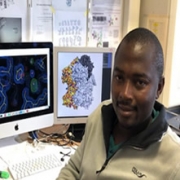
Peter Naniima
Hannover Medical School,Institute of Virology,
Structural Virology Group
Since Oct 2015 I have been doing my research in the Lab of Professor Thomas Krey (Hannover Medical School). My research focus is on structure-function relationship of viral proteins crucial for viral assembly. To this end we use structural biology approaches such as X-ray
crystallography to investigate protein-protein interactions of viral proteins at atomic resolution. Structural studies are usually complemented with structure-based functional experiments in order to gain a mechanistic understanding of how a given viral protein exerts its function. Ultimately, the goal is to facilitate structure based drug design.
Prof Karl Hoffmann
My research revolves around trying to answer this question: How can fundamental studies of developmental biology & gene regulation guide our search for next generation anthelmintic solutions?Parasitic worms cause some of the most disfiguring, debilitating & chronic infectious diseases of human & animal populations across the globe. Reliance on limited drug classes to treat affected individuals & the lack of available vaccines to induce protective immunity suggests that current experimental approaches in identifying urgently needed anthelmintics have yet to deliver sustainable solutions.
Professor David Dunne
David Dunne is a Professor of Parasitology in the Department of Pathology at Cambridge. He leads the project on Epidemiology and Immunology of Schistosomiasis and other Human Parasitic Diseases.David is a founding member of the Cambridge-Africa initiative which evolved from the extensive research relationships he and other academics have nurtured with African institutions over many years. It is from the good work of the Cambridge-Africa programme that this Centre for Global Health Research was developed, with the belief that the type of initiatives and research conducted under Cambridge-Africa should be expanded to low and income countries globally, with the same ethos of equitable partnerships, fellowships and Collaborations for quality research and impact.
Professor Heiner Grosskurth
From 2003 to 2010, he was the director of the MRC Uganda Research Unit on AIDS, a collaborative institution of the MRC and the Uganda Virus Research Institute and one of the School’s overseas collaborative sites. Since 2011, he has been based at the Mwanza Intervention Trials Unit (MITU) in Tanzania, working with Saidi Kapiga on a research collaboration between the National Institute of Medical Research (NIMR) and LSHTM.He serves on the steering and advisory committees of several research programmes in East Africa and is a founding member of the Lake Victoria Consortium for Health Research that aims to improve the health of populations in fishing communities in Uganda, Kenya and Tanzania.

Professor John Trowsdale
Professor John Trowsdale is Professor of Immunology in the Department of Pathology at the University of Cambridge. His work has focused on the genetics and functions of the human MHC class II region. His main achievements are linked with the initial discovery and function analysis of genes including HLA-DQ, -DO, -DM, -LMP and –TAP. Several of these genes were initially named RING genes, which stands for really interesting new gene and this turned out to be a prophetic nomenclature. Professor Trowsdale initiated the complete sequencing of human MHC, the fruits of which have recently appeared.
Professor Simon Frost
Simon Frost is a Reader in Pathogen Dynamics at the University of Cambridge, working on the dynamics and evolution of infectious disease, particularly those caused by rapidly evolving RNA viruses. His undergraduate training was in Natural Sciences at Cambridge (1992), and he received his D.Phil. from Oxford in mathematical biology (1996).Dr Frost is working on real-time, scalable inference of epidemiological datasets related to infectious diseases, integrating many - often imperfect - sources of data, generating inferences of quantities such as transmission rates on-the-fly.

Rebecca Namugabwe Nsubuga
Rebecca N Nsubuga holds a bachelor's degree in Mathematics from Makerere University, a Master's degree in Biostatistics from Limburgs Universitair Centrum (Now Hasselt University), Belgium and a PhD from The University of Edinburgh, Scotland. She is a former lecturer, for over ten years, in the Department of Mathematics, Makerere University.Currently a Senior Scientist (Statistician/Modeller) at the MRC/UVRI Uganda Research Unit on AIDS and a visiting professor at Hasselt University, Belgium. Her career with MRC/UVRI spans over seven years of mathematical modelling of HIV/AIDS epidemic and statistical analysis of longitudinal cohort data as well as cross-sectional data. She is a member of the Uganda Mathematical Society and the International Biometric Society.
Dr. Nsubuga's research interest is in: statistical analysis and mathematical modelling of infectious disease data; in particular HIV/AIDS epidemic; genetics, genomics and Bioinformatics.
Publications
- Kamali A, Nsubuga RN, Ruzagira E, Bahemuka U, Asiki G, Price MA, Newton R, Kaleebu P, Fast P. Heterogeneity of HIV incidence: a comparative analysis between fishing communities and in a neighbouring rural general population, Uganda, and implications for HIV control. Sex Transm Infect. 2016 Mar 1. pii: sextrans-2015-052179. doi: 10.1136/sextrans-2015-052179. [Epub ahead of print].
- Shafer LA, Nsubuga RN, Chapman R, O'Brien K, Mayanja BN, White RG. The dual impact of antiretroviral therapy and sexual behaviour changes on HIV epidemiologic trends in Uganda: a modelling study. Sex Transm Infect. 2014 Feb 24. doi: 10.1136/sextrans-2013-051219.
- Nsubuga RN, White RG, Mayanja BN, Shafer LA. Estimation of the HIV basic reproduction number in rural South West Uganda:1991-2008. Plos ONE 2014; PONE-D-13-06125R4 10.1371/journal.pone.0083778.
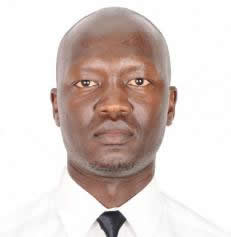
Richard Sanya
Dr Sanya is a Ugandan physician trained in Makerere University.Currently, he is a scientist with the Co-infections Study Programme at theMRC/UVRI Uganda Research Unit and leads a large cluster-randomised trialinvestigating the effects of anthelminthic treatment on health outcomes.Previously, he served as a lecturer at the Faculty of Medicine, GuluUniversity, Uganda and as a medical officer in a busy rural hospital-StKizito Hospital, Matany, Moroto, Uganda.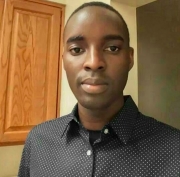
Ronald Galiwango
Ronald Galiwango obtained an undergraduate first-class honors in Mathematics (Major) and Statistics (minor) from Makerere University, Uganda in 2013 having been admitted on government sponsorship (national merit). Following his undergraduate degree internship with the MRC-Uganda Virus Research Institute, Ronald was awarded a Wellcome Trust funded strategic internship award in bioinformatics thereby obtaining introductory training in bioinformatics.He is a recipient of a Commonwealth Fellowship and a Commonwealth, Cambridge and European Trust Fellowship both of which enabled him to undertake an MPhil in Computational Biology at the University of Cambridge, UK in 2014. He could thus receive training in Genome informatics and Sequence Analysis; Network building, analysis and inference; Scientific programming with ‘R’; and Functional Genomics/ Gene expression data analysis: Gene Annotation Enrichment and Pathways Analysis.
For his Masters degree project, Ronald worked on a computational project that explored fatty acid profiles from plasma phospholipids, as a tool for understanding metabolic and nutritional health and disease. In 2016, Ronald was awarded a Fogarty-NIH PhD fellowship to undertake a PhD in Epidemiology at the University of Georgia, USA. He has since progressed to candidacy. For the PhD project, Ronald is using social networks of index TB cases, pathogen Whole Genome Sequences and Epidemic Network Modeling to characterize endemic Mycobacterium Tuberculosis transmission using data from a recently completed study in Kampala, Uganda on Community Health and Social Networks of Tuberculosis (COHSONET). Ronald is generally interested in using Computational Approaches (Bioinformatics/Computational Biology – Phylogenetics; Mathematical and Statistical Modeling; Network Science/ Social Network Analysis), Big data analytics and Machine Learning to answer Epidemiology research questions.
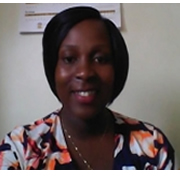
Rose Nabatanzi
I am a PhD student at Makerere University at the College of Health Sciences. I have Bachelor’s degree in Biomedical Laboratory Technology and a Master of science degree in immunology and Clinical Microbiology both from Makerere University. I have 12 years’ laboratory experience doing hands-on laboratory bench work at various specialized research centres including the Uganda Virus Research Institute, Joint Clinical Research Centre and currently MakCHS.
Sheila N. Balinda
My doctoral project focused on the Molecular virology of foot- and-mouth disease virus(FMDV) in Uganda. The aim was to characterise and determine evolutionary relationships of the various strains of FMDV in East Africa. The findings contributed towards improvements in FMDV diagnostics as well as the use of vaccines that are closely matched to circulating strains in the region.
Stephen Cose
RC/UVRI Uganda Research Unit, PO Box 49, Plot 51-59 Nakiwogo Road, Entebbe, Ugandastephen.cose@mrcuganda.org; stephen.cose@lshtm.ac.uk
Senior Immunologist (MRC, UG), Lecturer in Immunology (LSHTM, UK)
LSHTM, UKMUII plus Fast track Masters Fellow

Suzanne Dawn Turner
My research career began at the Paterson Institute for Cancer Research in Manchester, UK where I conducted a PhD into chemoprotective gene therapy under the guidance of Linda Lashford, Joe Rafferty and Lez Fairbairn. This was followed by postdoctoral work at AstraZeneca Central Toxicology Labs with John Ashby before moving to the Babraham Institute in Cambridge to focus on T cell signalling with Denis Alexander. From there I launched my independent research career with competitive fellowships from the Department of pathology, University of Cambridge, and Leukaemia and Lymphoma Research (now Bloodwise; a Bennett Fellowship (5 years) followed by a Bloodwise-funded lectureship (5 years)). Research in the lab continues with funding from a variety of organisations including CRUK, Children with Cancer UK, Neuroblastoma UK, EU Marie Curie Actions and Alex Hulme Foundation.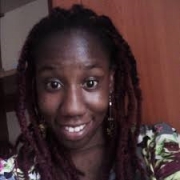
Vanessa Mwebaza Muwanga
I am a Biomedical Scientist with up to three years of work experience in research settings and laboratories. Through the various roles that I have taken on, I have been able to attain skills in developing research proposals, performing several laboratory assays, communication, statistics, data analysis, organization, team work, use of computer software as well as laboratory quality control and quality assurance procedures.I have a great interest in Immunology research and one pathogen I am particularly interested is Mycobacterium Tuberculosis. My career goals involve taking part in any work that can enhance my skills as a researcher and an Immunologist.
I believe that this will prepare me for the PhD that I will pursue in the near future and contribute to my career development. Ms. Vanessa graduated with a distinction in Master of Science Immunology from the University of Aberdeen, UK and is currently a Monitoring and Evaluation Associate at The Innovation Village and also a postgraduate trainee at Infectious Diseases Institute, Uganda.